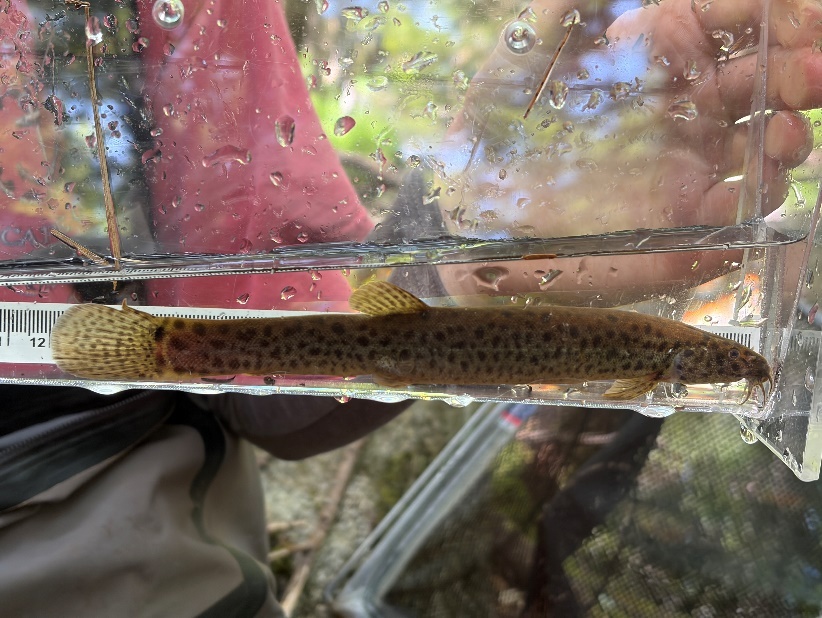
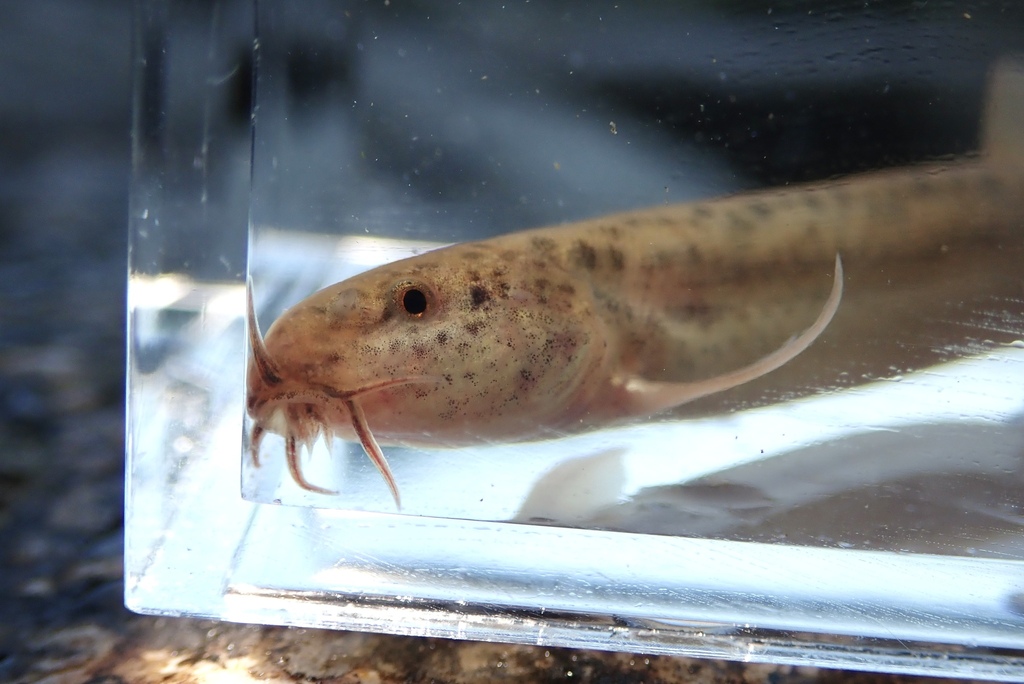
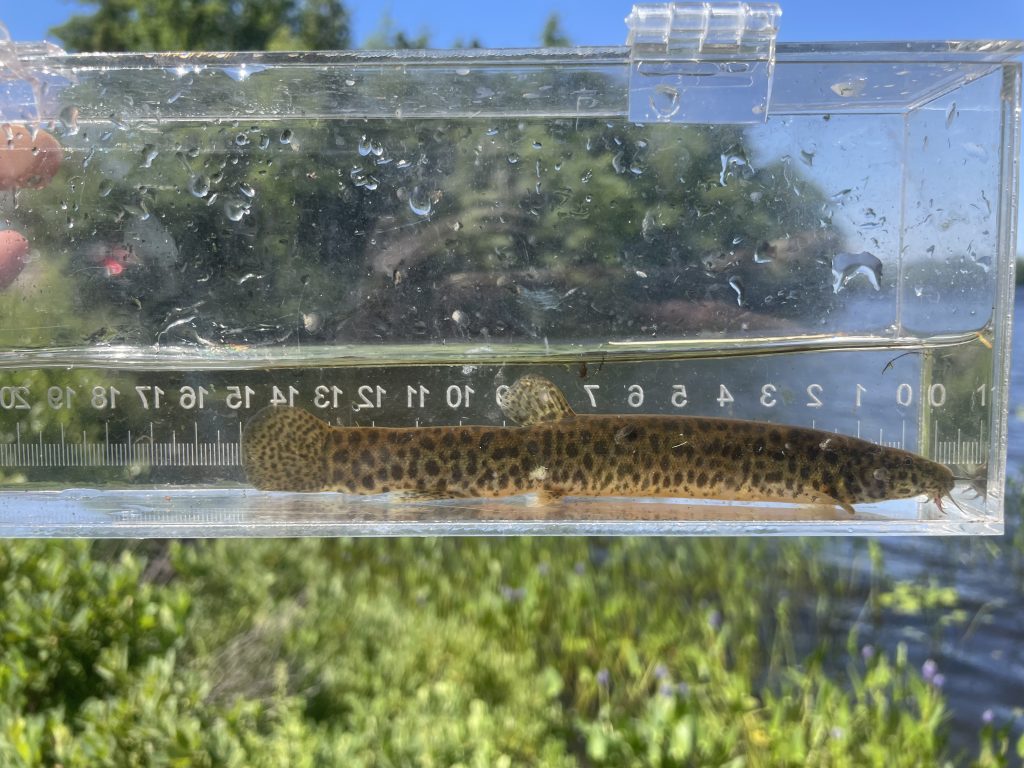
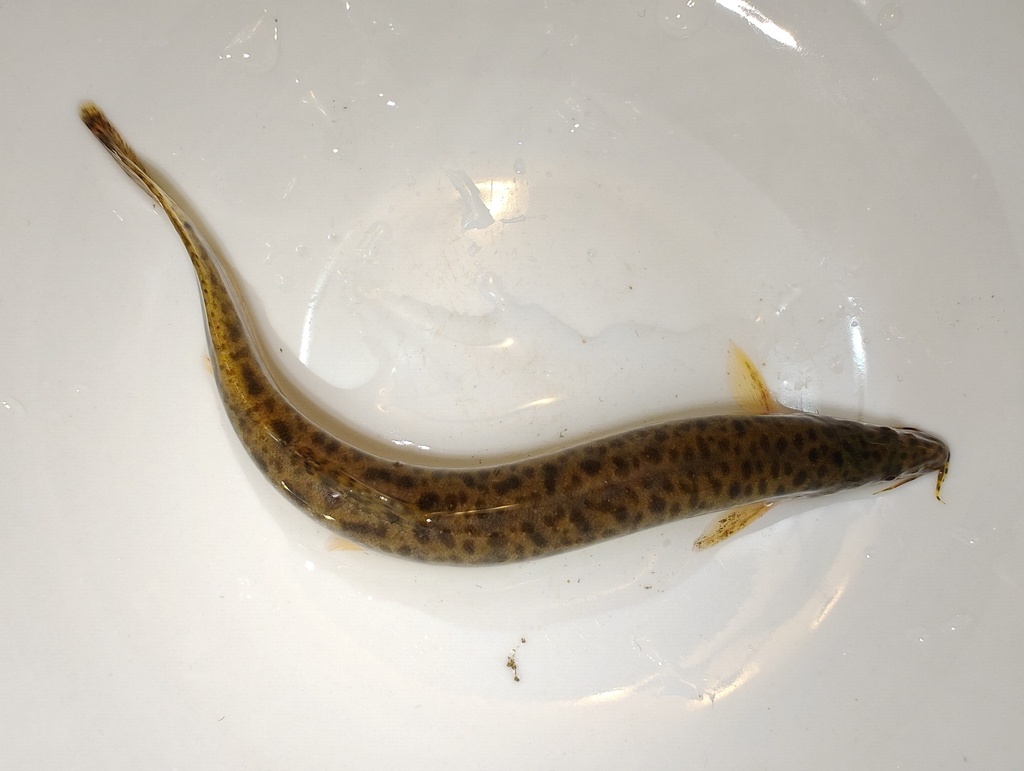
Misgurnus anguillicaudatus | Other Names: Weatherfish, Weather Loach, Dojo Loach
Description
Pond loach (Misgurnus anguillicaudatus) is a freshwater fish with a long eel-like body. Generally, adults are 10-25 cm long, reaching a maximum length of 30 cm. They have greenish-brown spots along their back and sides, with a silver belly. Their mouths are small and narrow with six to eight barbells (whiskers). They have a short dorsal fin and small spines on their pectoral fins.
Habitat & Impact
Pond loach is typically found in muddy, shallow waters, though it is adaptable to a variety of conditions. It is highly tolerant of degraded habitat quality and can survive in nutrient-poor areas with low O2 concentrations. It can withstand both extreme cold and heat. Their presence reduces native biodiversity through competition and predation. Furthermore, they often alter their ecosystems by disturbing sediments through burrowing, leading to increased turbidity and nitrogen levels.
Pathway
Native to East and Southeast Asia, its native range spans from Siberia to Northern Vietnam. North American introductions have been linked to aquarium releases and escapes.
The thermal tolerance of this species is very impressive, as it can survive being fully encased in ice and withstand water temperatures up to 38°C.
Stewardship Actions
Don’t release any aquarium animals into waterbodies. If you are no longer able to care for an animal, rehome it, return it to a retailer, or, if necessary, consider humane euthanasia. If you spot a pond loach in the wild, take a photo, make note of your coordinates, and report it to DFO, iNaturalist, or directly to the NSISC.