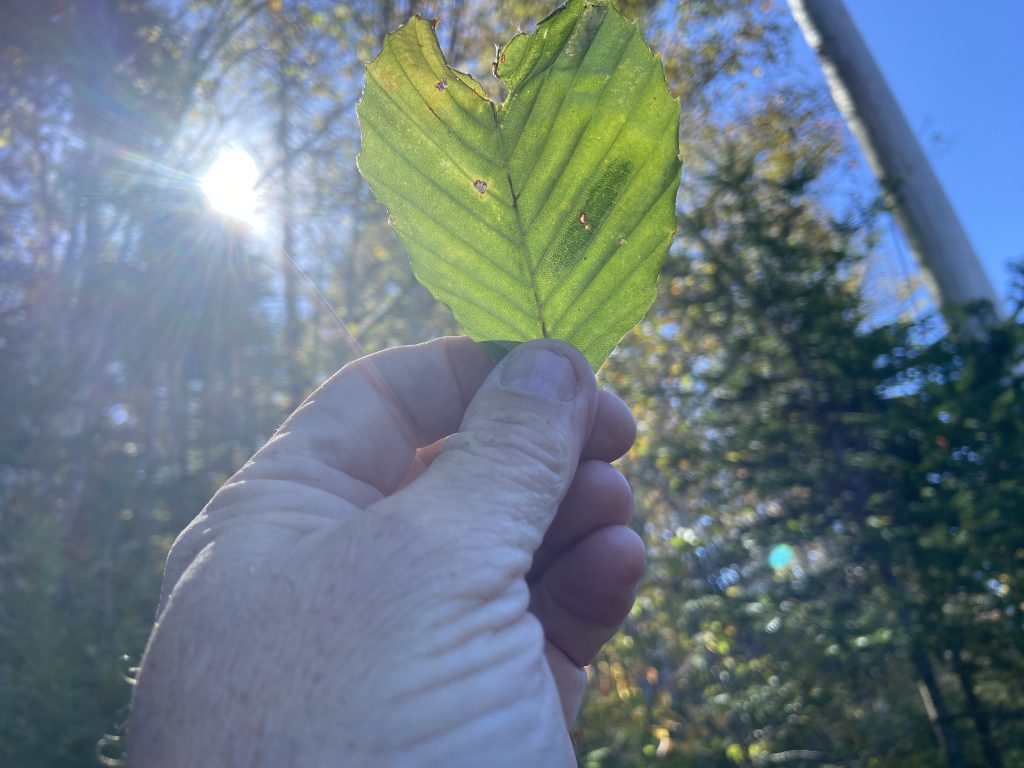
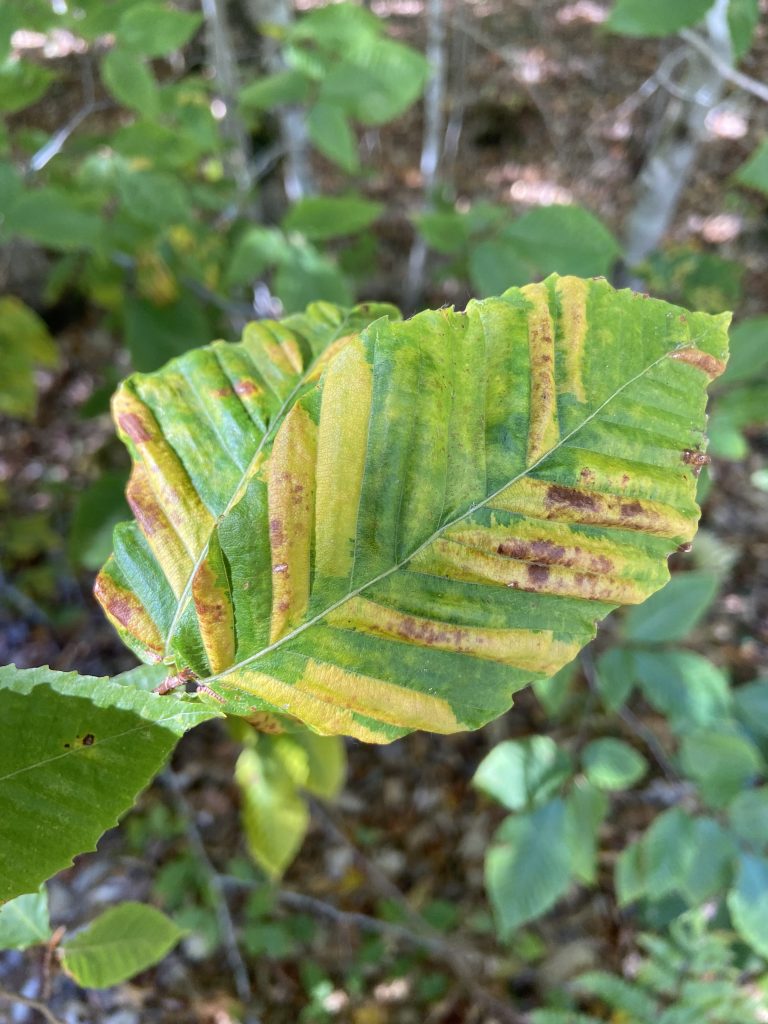
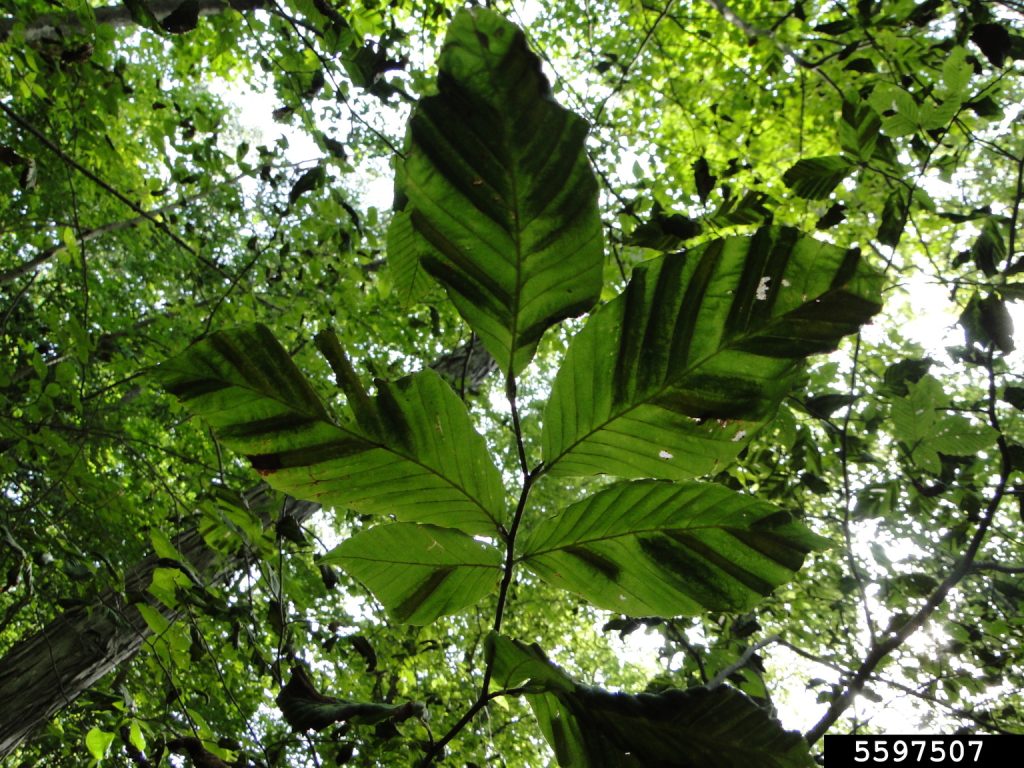
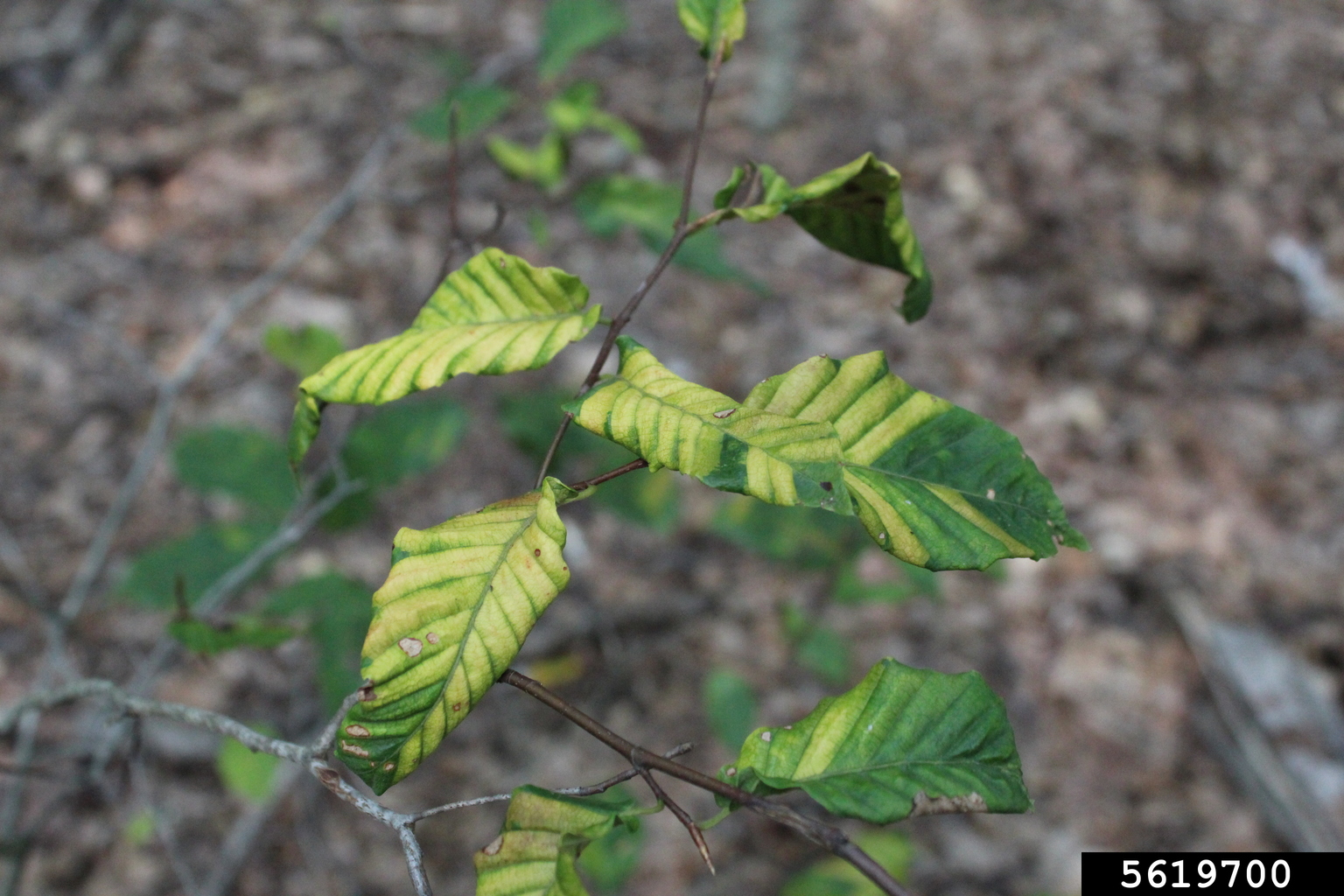
Beech Leaf Disease is a disease caused by the microscopic nematode Litylenchus crenatae. ssp. Mccannii. This worm-like organism infests beech trees (Fagus), with symptoms being observed on the leaves. The earliest sign of Beech Leaf Disease is dark green stripes between the leaf veins. This is best observed by looking up at the leaves under sunlight. As the disease progresses, leaves thicken, sometimes exhibiting a leathery texture. These leaves may become prematurely yellow, deformed, or curled. The leaves may drop early, with no new buds developing afterwards.
Habitat & Impact
Beech Leaf Disease infects American Beech (Fagus grandifolia) and other non-native Beech trees such as European Beech (Fagus sylvatica). It can impact all growth stages, but it is most detrimental to saplings and can result in the mortality of infected individuals within 2 to 5 years, with death in mature trees occurring after 6 to 10 years. This invasive species will further the already widespread decline in Beech populations in Nova Scotia, caused by other invasive species such as Beech Bark Disease and Beech Leaf Mining Weevil. Continued loss of native beech trees will alter ecosystem structures by changing the abundance of food and habitat for a variety of wildlife.
Pathway
Nematodes that cause Beech Leaf Disease are believed to be native to Japan. It was first observed in North America in 2012 in Ohio. Since then, it has spread to much of the Northeastern United States, with the first detection in Canada occurring in 2017 in Ontario. In 2025, Beech Leaf Disease was discovered in Nova Scotia in Digby and Yarmouth County.
Much remains unknown about its introduction, and ongoing studies are examining specific mechanisms of spread. However, it is hypothesized that its spread is linked to the movement of live plant or tree materials, windborne rain, river streams, birds, and invertebrates.
Unlike many other tree parasites, which target roots during the growing season, this subspecies attacks trees’ buds during the winter.
Stewardship Actions
To stop the spread of Beech Leaf Disease, don’t move Beech saplings, leaf litter, and firewood. If you think that you have spotted this invasive species, take photos of the symptoms, make a note of your location, and report it to the NSISC.