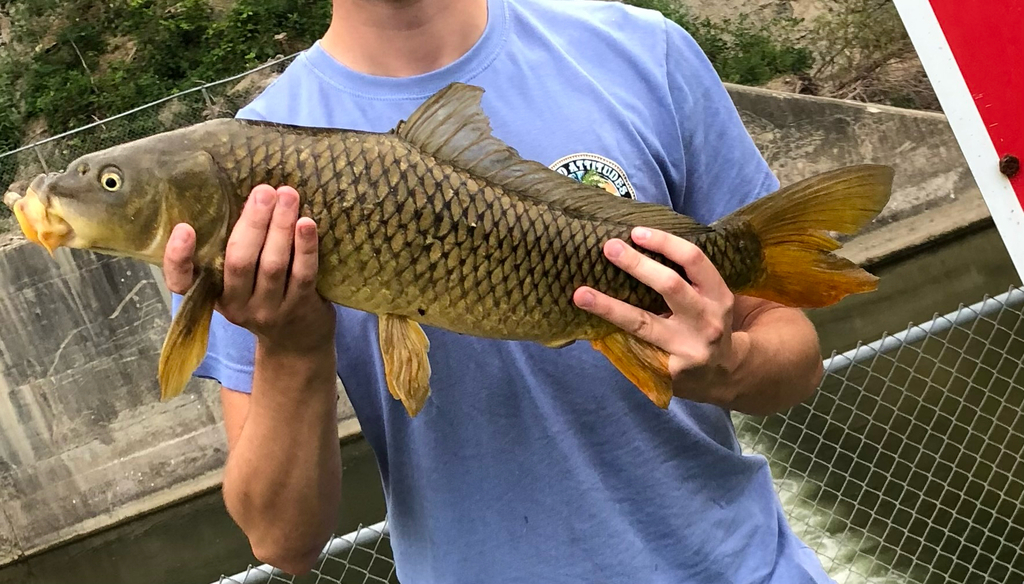
Cyprinus carpio | Other Names: European Carp, Eurasian Carp
Description
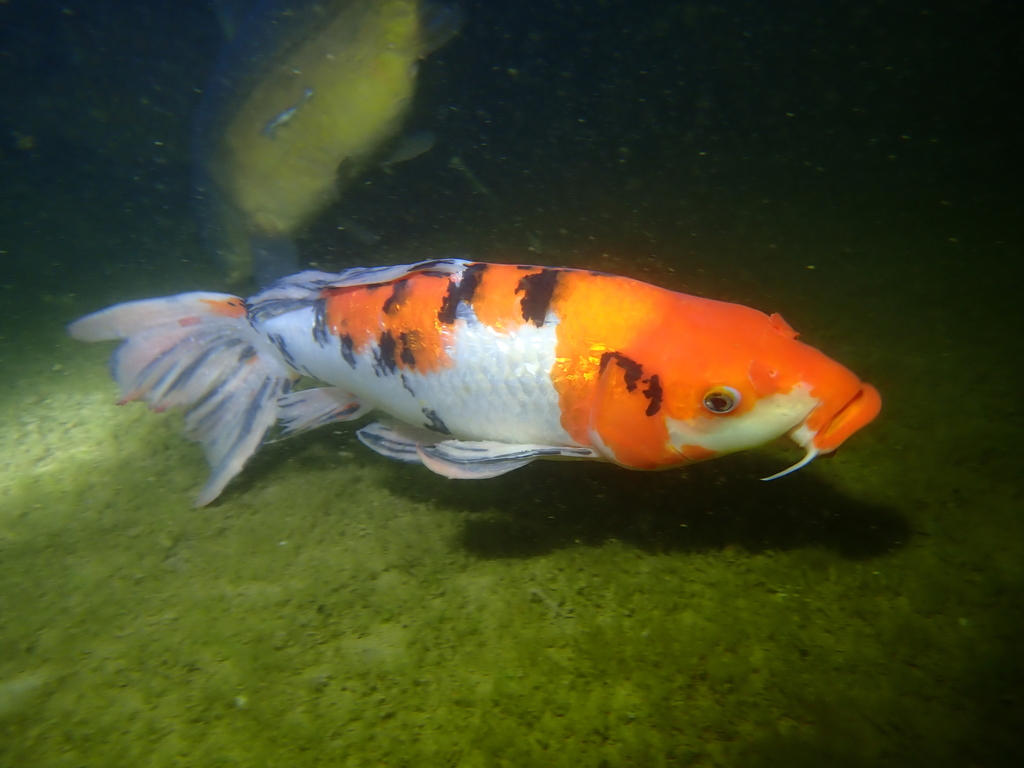
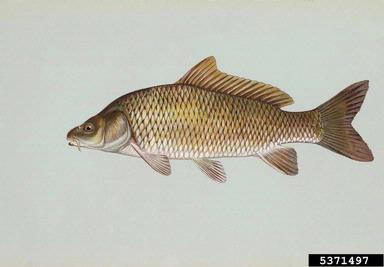
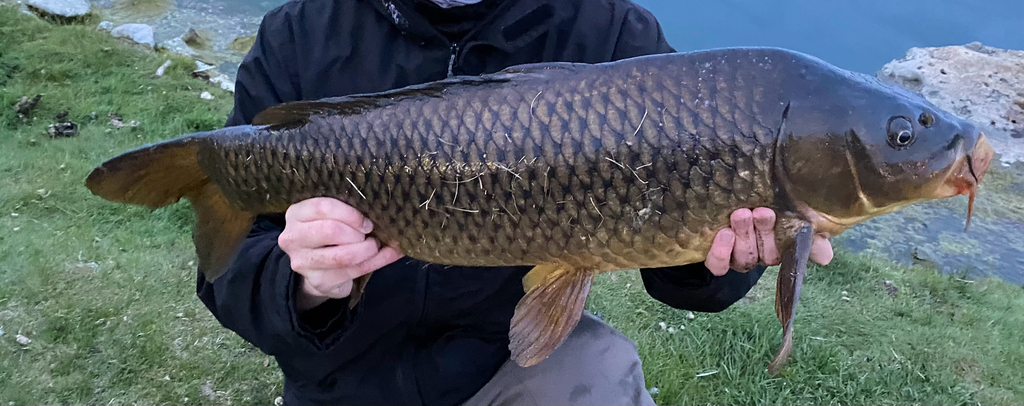
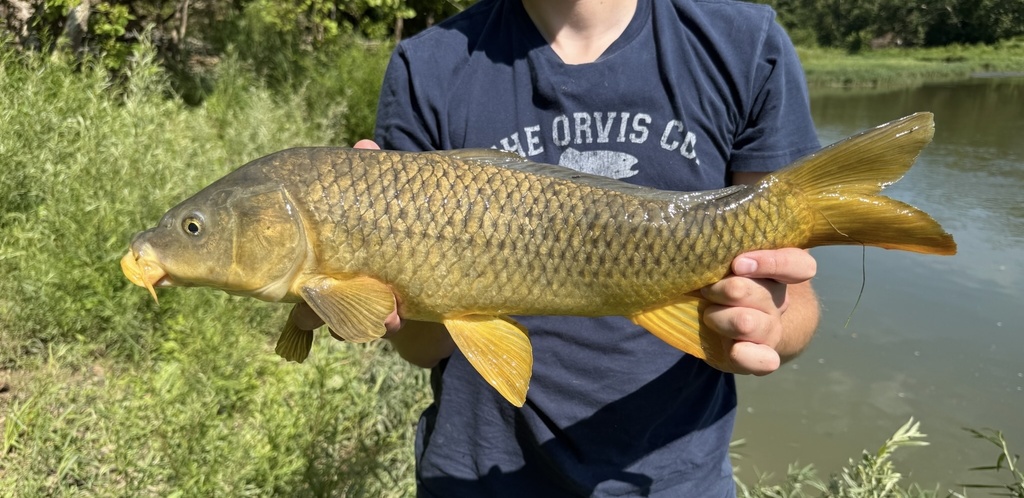
Common carp (Cyprinus carpio) is an omnivorous fish in the Cyprinid family, and Koi breeds are commonly sold for ornamental purposes. They are the largest of this family, reaching lengths of 110 cm, weighing up to 40 kg (88 lbs), and living for up to 40 years. They have a variety of colourations, including silver, or olive-green bodies, a brass or grey back and sides, with a yellowish belly. Koi breeds are typically some combination of orange, black or white. Despite originating in Asia, Common carp is not included in the “Asian carp” group (four other invasive carp species). Common carp have barbels (whisker-like structures), while Asian carp do not. They feed on a variety of food sources: zooplankton and phytoplankton (as a juvenile), aquatic plants, algae, benthic macroinvertebrates, smaller fish, and fish eggs.
Habitat & Impact
Common carp are adaptable to a variety of conditions, making them a highly effective invasive species. Their ideal conditions include warm shallow lakes and rivers with abundant vegetation. Impacts associated with Common carp include water quality degradation by increasing turbidity, disruption of food webs, predation on smaller fish and their eggs, and competition with native species for resources and space.
Pathway
Common carp was first introduced to North America in the 1800s from non-native populations in Europe to serve as a sport fish and food source. Through accidental and intentional releases, they have become widespread throughout the Great Lakes region and the St. Lawrence River.
After being released into natural waterbodies, Koi will darken in colour to better camouflage in their new environment.
Stewardship Actions
If you’ve found a Common carp, take photos, make a note of the location, and report it to Fisheries and Oceans Canada. If you own a Koi as a pet, never release it into a water body. Rather, find suitable alternatives to release, including rehoming, returning the fish to a retailer, or humane euthanasia.