
Native to Asia, Europe and North Africa, Eurasian water-milfoil is an underwater perennial plant. Introduced to North America in the 1940s, it has quickly spread throughout Canada. While it has been observed in our neighbouring province of New Brunswick, it has not been reported in Nova Scotia. The plant forms thick underwater mats, crowding out native aquatic plants, altering ecosystems, and threatening biodiversity. Native species and species at risk can be negatively affected.
Eurasian water-milfoil is highly adaptable, but it is primarily found in still or slow-moving freshwater bodies, such as lakes, rivers, and ponds with soft, muddy or silty sediment. The plant prefers good light penetration and establishes in areas where other plants may not be well established. It thrives in alkaline, hard water with a high pH. It can use bicarbonate (HCO₃⁻ ) as a carbon source, giving it an advantage in nutrient-rich environments. The plant can even survive cold winters in frozen lakes and ponds.
Eurasian water-milfoil made its way to North America through the aquarium trade and in ship ballast water. This plant can regenerate from broken stems, making recreational boating and fishing key pathways for spreading plant fragments to new areas, which in turn establishes new populations.
Northern water-milfoil (Myriophyllum sibiricum), native to Nova Scotia, is an excellent alternative to using Eurasian water-milfoil in aquarium and pond settings.
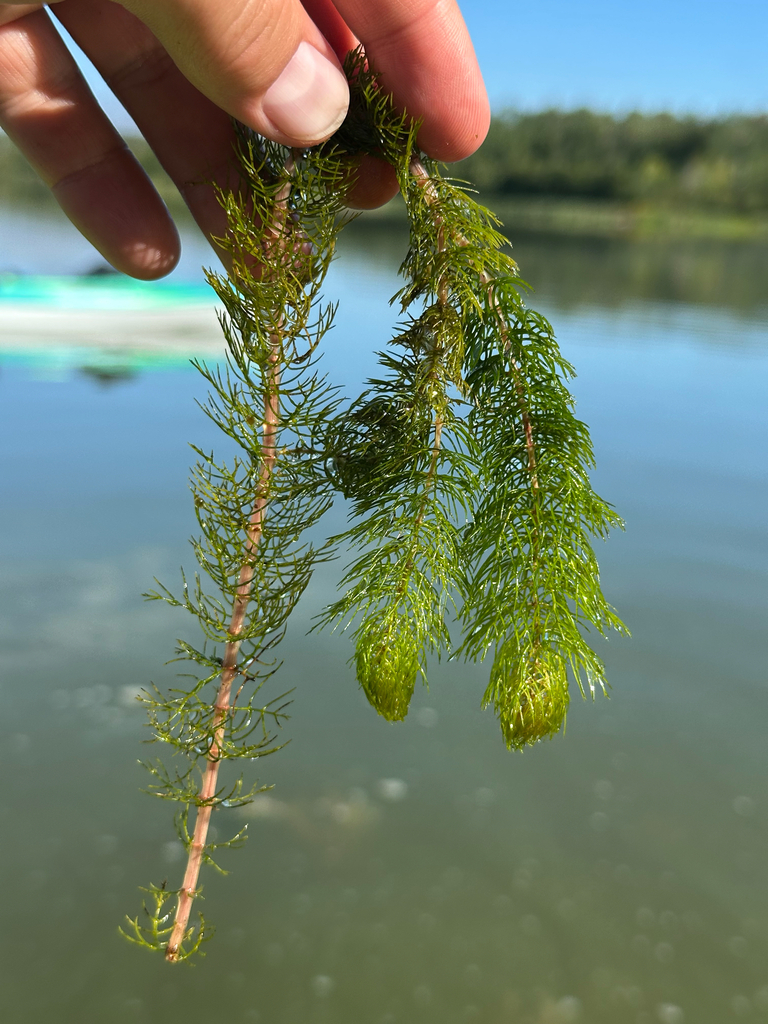
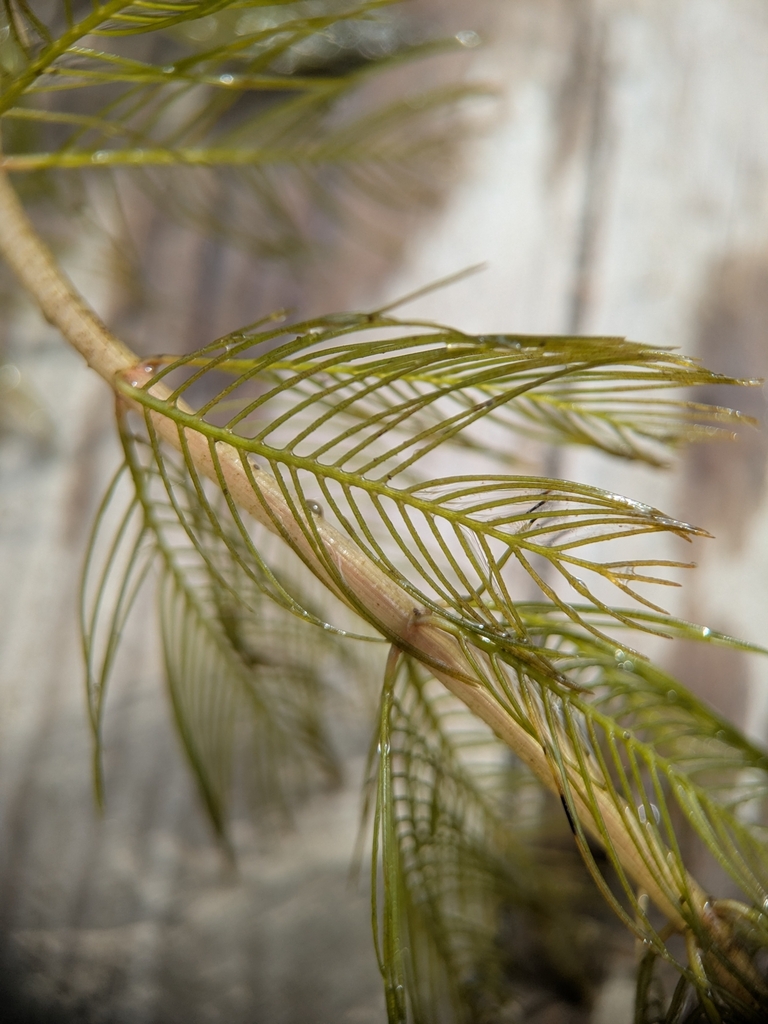
Feather-like leaves arranged in whorls of three to five leaflets, leaves are similar in length, with 12 to 21 pairs of leaflets. Small reddish flowers emerge in mid-summer, with whitish red to red-brown stems.
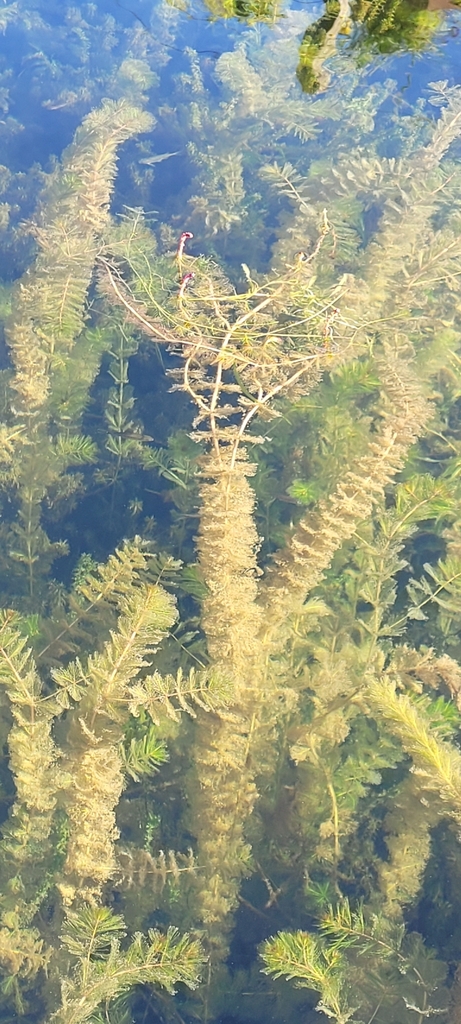
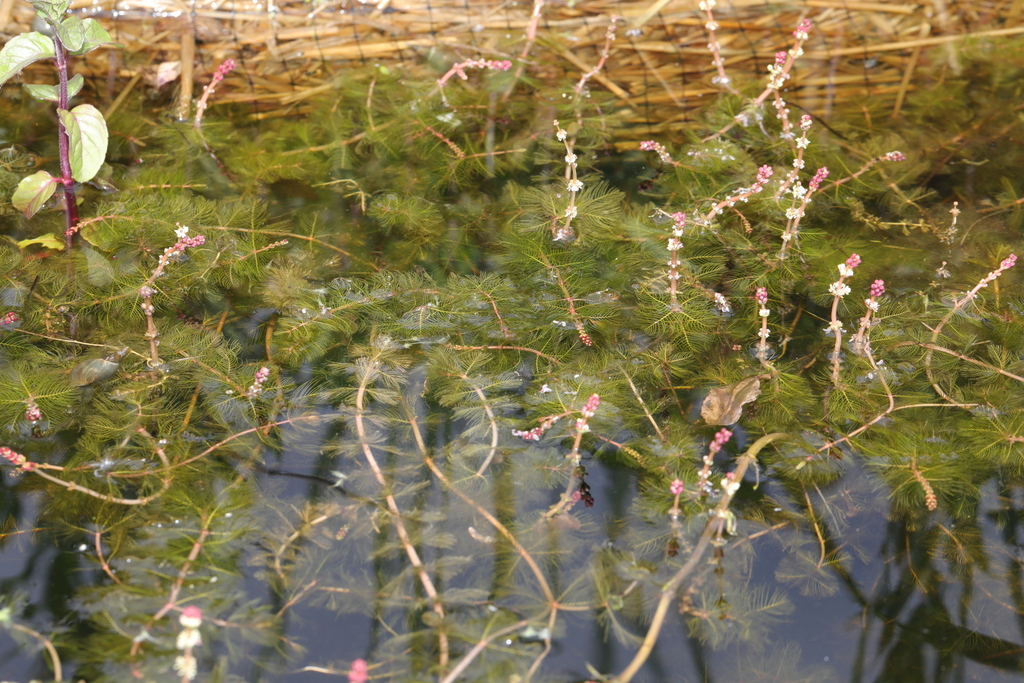
The first sighting in Canada was in 1961. This resilient plant is now in all the Great Lakes and most major Canadian waterways. Despite its delicate appearance, Eurasian water-milfoil is a very hardy survivor! It begins growing early in the spring, outcompeting native species before they even wake up!
Learn how to identify Eurasian water-milfoil. Use native and non-invasive plants for your water gardens. When boating, fishing, or recreating on a body of water with Eurasian water-milfoil, reduce speed and avoid affected areas. Inspect and ensure your gear and watercraft are clean, drained, and dry by following the CLEAN DRAIN DRY protocols to prevent the spread of aquatic plants through any plant seeds or fragments that may be attached to gear and equipment.