Play Clean Go

Play Clean Go
boot
boot
boot
boot

Terrestrial invasive species are easily spread from one location to another when they become stuck to shoes, tires, pets, and more. Plants, seeds, and insects can establish in new locations if they are not removed before leaving the region in which they were picked up. 

PlayCleanGo is an initiative that encourages people to get outside and enjoy nature while protecting our natural resources, by preventing the spread of terrestrial invasive species through behavioural changes.

How can you help?

Remove any insects, mud or plants from your gear, boots and pets; Check ATV and bike tires, and remove any plants that may be caught in your equipment before moving to a new trail; Clean your gear and boots before entering and leaving a recreation site; Stay on designated trails and roads; and Learn how to identify invasive species.

boot
boot

Invasive Species in Nova Scotia

White Nose Syndrome

White Nose Syndrome

FUNGUS Pseudogymnoascus destructans Description Pseudogymnoascus destructans is a fungal pathogen that causes the disease known as White-Nose Syndrome. This disease is characterized by a white fungus that grows on a

Read More »
Reed Canary Grass

Reed Canary Grass

VASCULAR PLANT Phalaris arundinacea Description Reed Canary Grass is a cool season, perennial grass that grows up to 1.7 m tall. Its leaf blades are flat, 30–120 cm long, 1.9

Read More »
Hemlock Woolly Adelgid

Hemlock Woolly Adelgid

INSECT, TREE PEST Adelges tsugae Description Hemlock Woolly Adelgid is an aphid-like insect that parasitizes Eastern Hemlock (Tsuga canadensis) trees. The first generation of the bug are 1.4 mm long,

Read More »
Emerald Ash Borer

Emerald Ash Borer

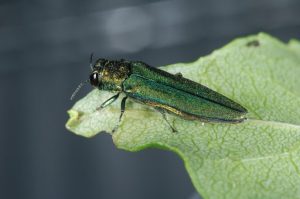
INSECT Agrilus planipennis Description The Emerald Ash Borer is a narrow, elongated beetle that is 8.5–14 mm long, and 3.1 –3.5 mm wide. Adults have a metallic-green back and bright-emerald
Read More »

Resources

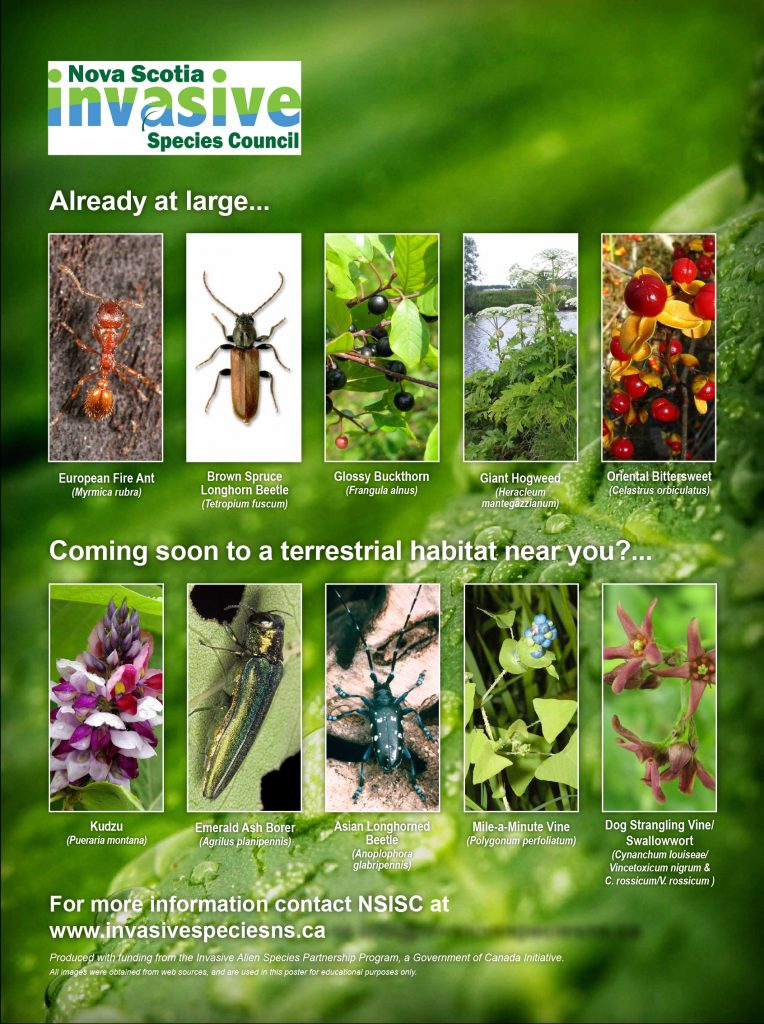
Terrestrial Invasive Species Poster

NSISC terrestrial

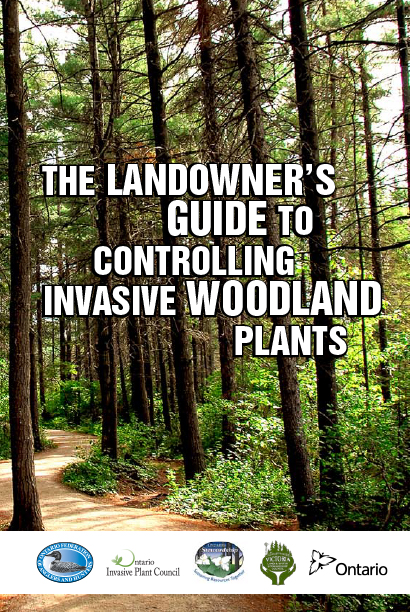
Invasive Woodland Plants Booklet

Woodland Plants

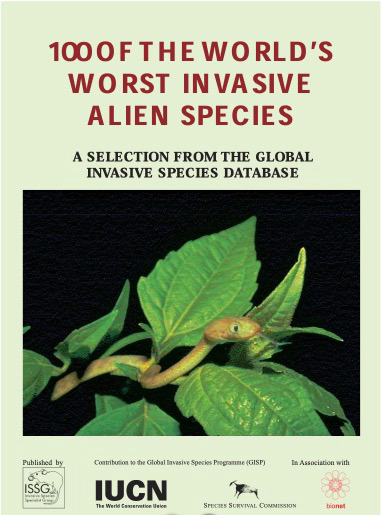
100 Worst Invasive Species Booklet

100 worst Invasive species