
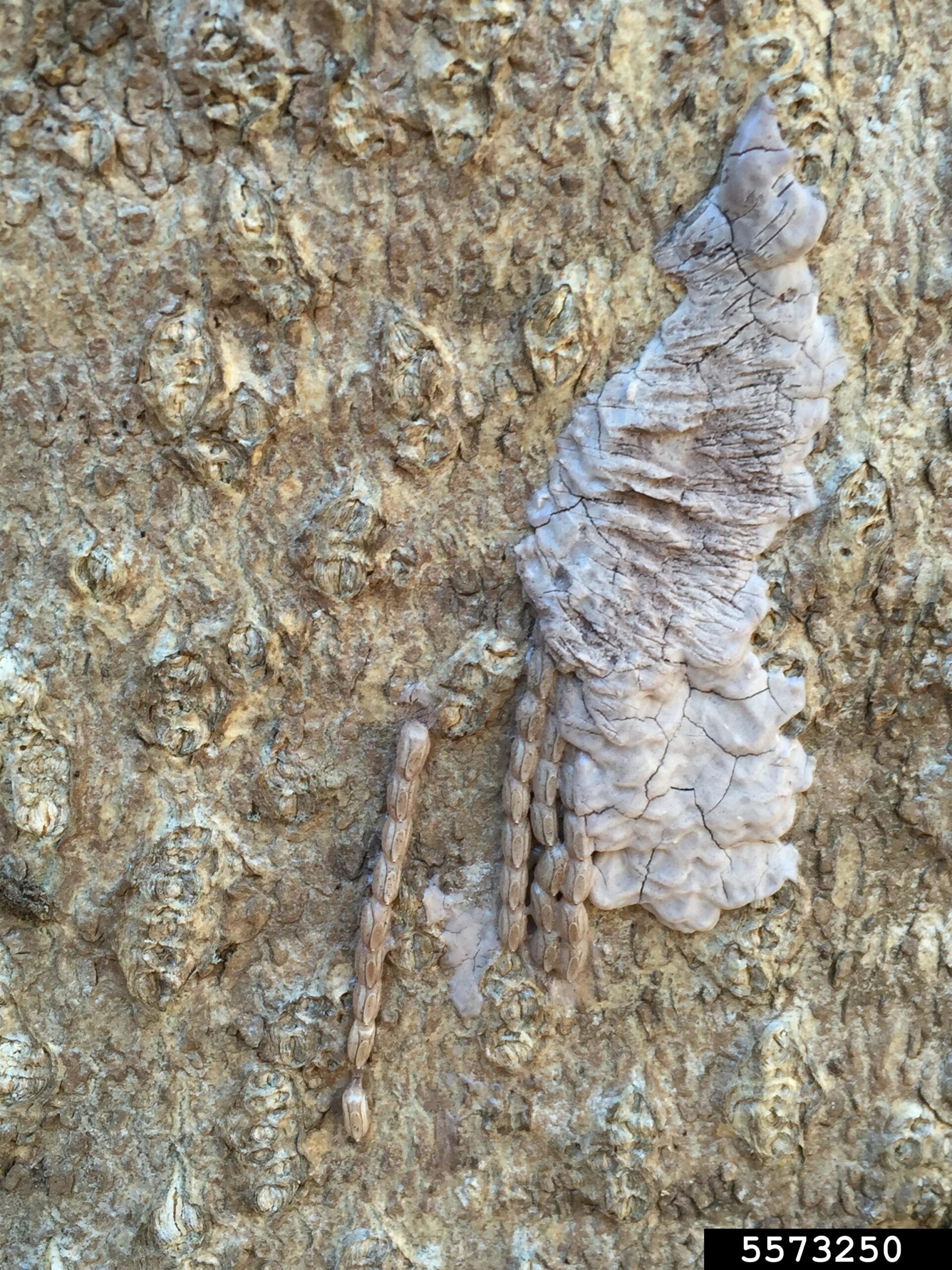
The Spotted Lanternfly is an invasive insect in the planthopper family Fulgoridae. It feeds on many ecologically important plant and tree species and can devastate crops. The Spotted Lanternfly completes its life cycle in one year and causes damage as both nymphs and adults. In the fall, females lay rows of tan coloured eggs that are covered with a white, waxy coating that turns grey. These egg masses, which look mud-like, can be found on trees, rocks, vehicles, and outdoor equipment, and can survive winter temperatures.
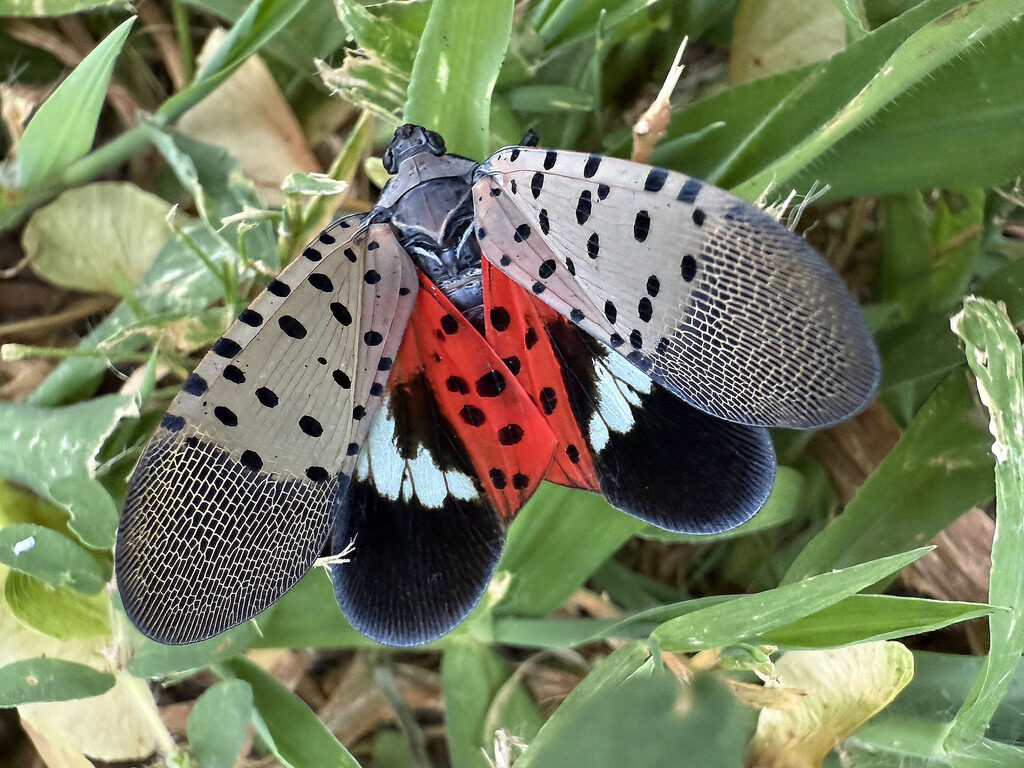
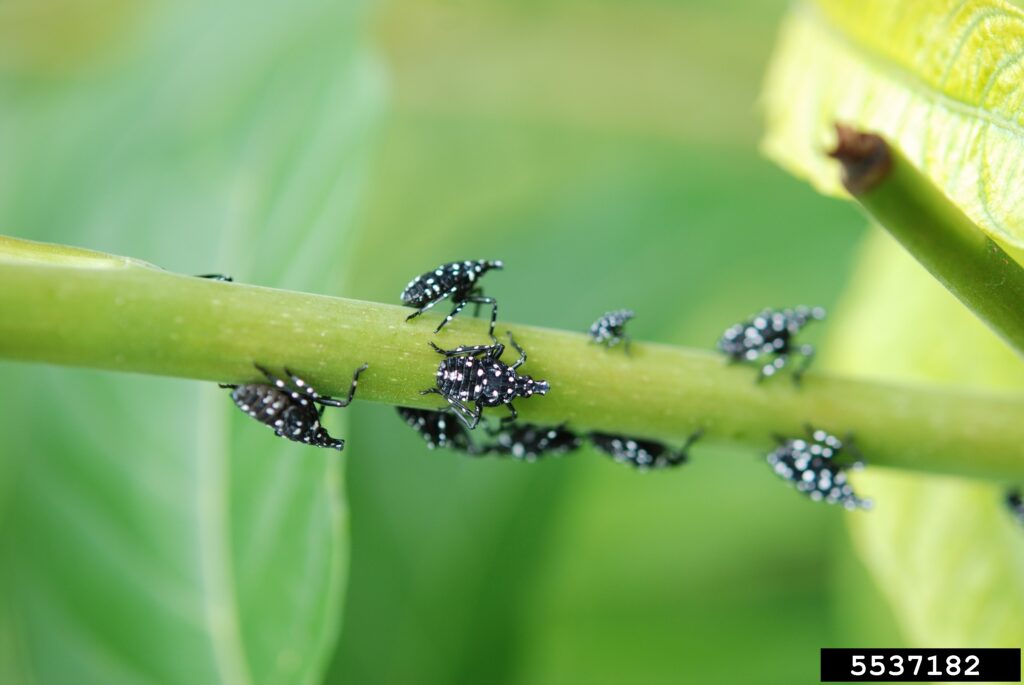
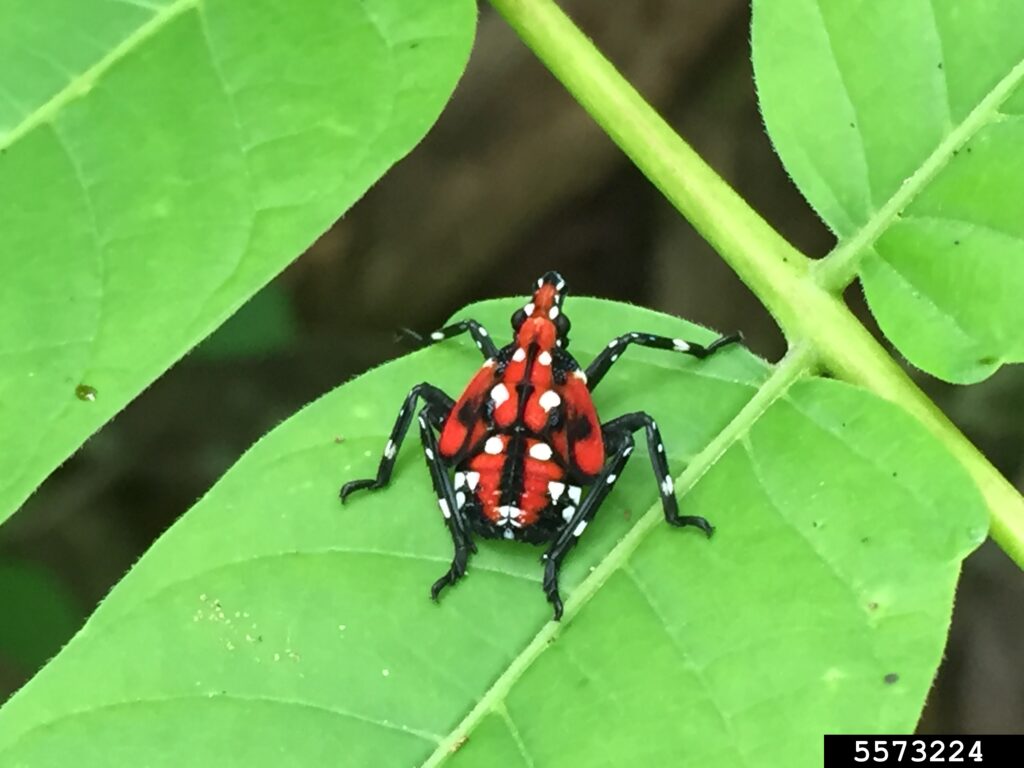
Nymphs typically hatch in May and progress through four wingless developmental stages called instars. During the first three instar stages, nymphs are black with white spots, with each successive instar becoming larger. The fourth instar nymphs can reach 13-15 mm in length and are bright red with white spots and black bands. In July, these nymphs will become adults approximately 25 mm long, with gray forewings covered in black spots, bright red hindwings, and a yellow and black banded abdomen. In September, adults will begin to congregate, mate, and then lay eggs.
Spotted Lanternflies are highly adaptable and can be found in urban, suburban, agricultural, and forested environments. It poses a particular threat to vineyards, orchards, and forests. Early instars have a broad host range and feed on young, tender shoots of perennial and annual plants. Fourth instar nymphs and adults typically restrict their feeding to woody tissues of grapevines (Vitis), stone fruit (Prunus), walnut (Juglans), maple (Acer), birch (Betula), and other hardwood species. The invasive Tree of Heaven (Ailanthus altissima) is a preferred host of the Spotted Lanternfly.
Their feeding weakens plants by extracting sap, leaving the plants more vulnerable to disease and pests. As they feed, the insects excrete honeydew, which coats surfaces beneath infested plants. This sticky substance promotes the growth of black sooty mold, which harms foliage and is a nuisance in outdoor spaces. Large infestations can cause extensive damage to crops and ornamental plants. In addition to their agricultural and ecological impact, infestations can also be an annoyance when large groups of adults gather on trees, structures, and vehicles.
The Spotted Lanternfly originates from Southeast Asia, including parts of China and Vietnam. It was first detected in North America in 2014 in Pennsylvania. Egg masses are laid on a wide range of smooth surfaces, such as vehicles, stone, firewood, outdoor equipment, and nursery plant stock, which allows the insect to spread long distances when these items are moved. Although adults are capable of hopping and flying short distances, human-assisted transport is the primary pathway through which this species expands its range.
An established breeding population of Spotted Lanternfly has not yet been detected in Canada. its spread is closely tied to human activity, and the movement of infested materials poses a significant threat of introduction.
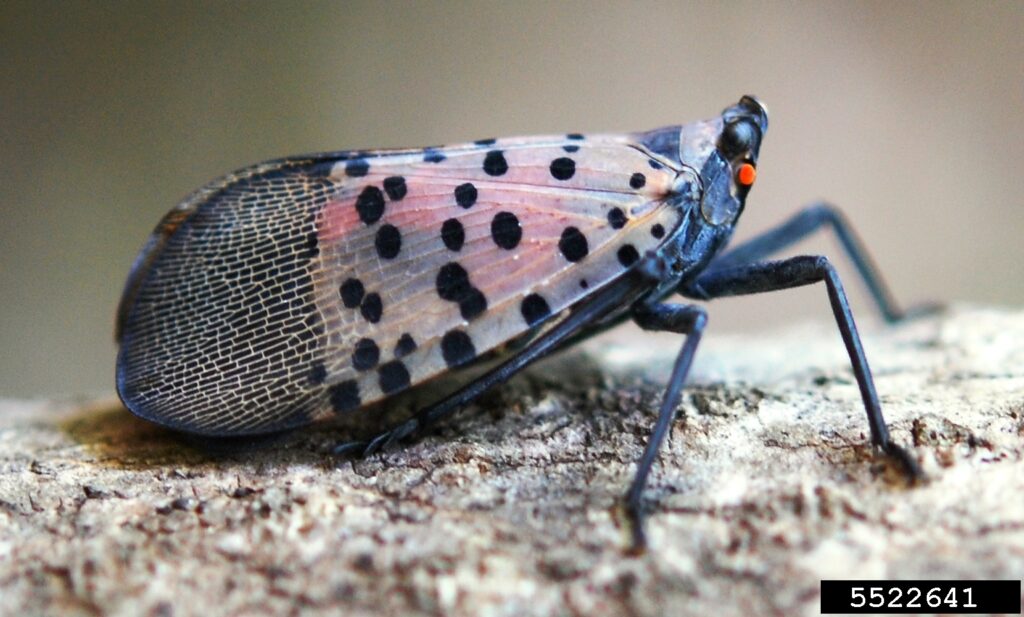
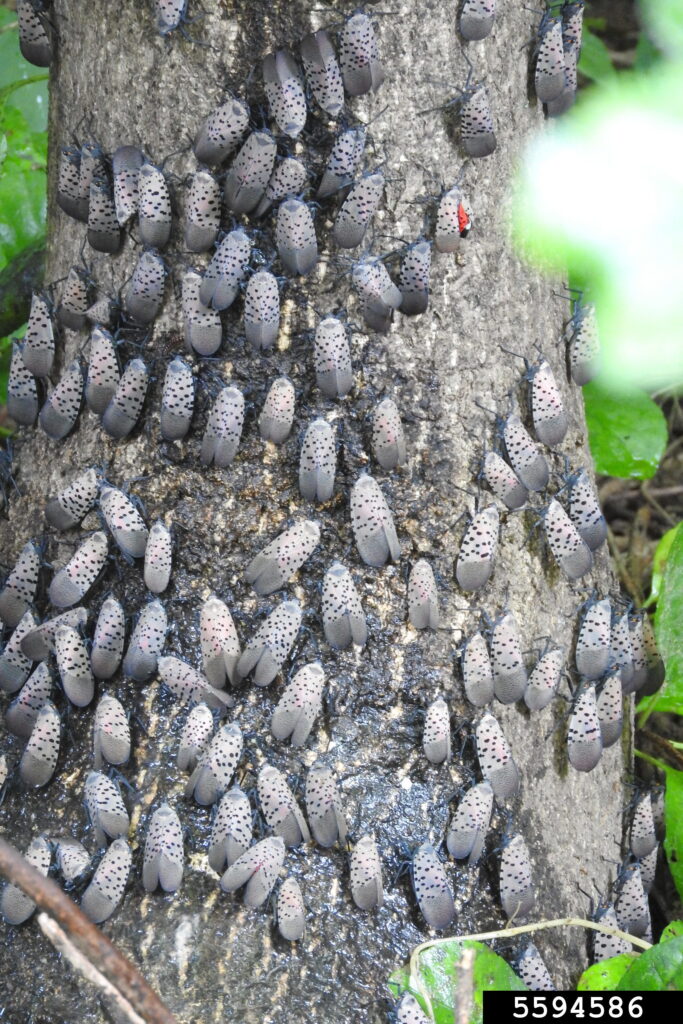
Nymphs in the first three instar stages are black with white spots, while the fourth instar is red with white spots and black bands. Adults have gray forewings with black spots, bright red hindwings, and a yellow-and-black banded abdomen.
The Spotted Lanternfly feeds on more than 100 species of trees and plants.
If you think you have seen a Spotted Lanternfly, take a photo or video, catch it or scrape the egg masses into a sealable container, and report it immediately to the NSISC or CFIA.
Prevention is the most effective way to reduce the spread of the Spotted Lanternfly. If you are travelling from Spotted Lanternfly infested areas in the United States, it is important not to accidentally transport these pests into Canada. Carefully inspect your vehicle and any stored items, including camping gear, sports equipment, tarps, firewood, plant material, and other outdoor items for egg masses or insects.