
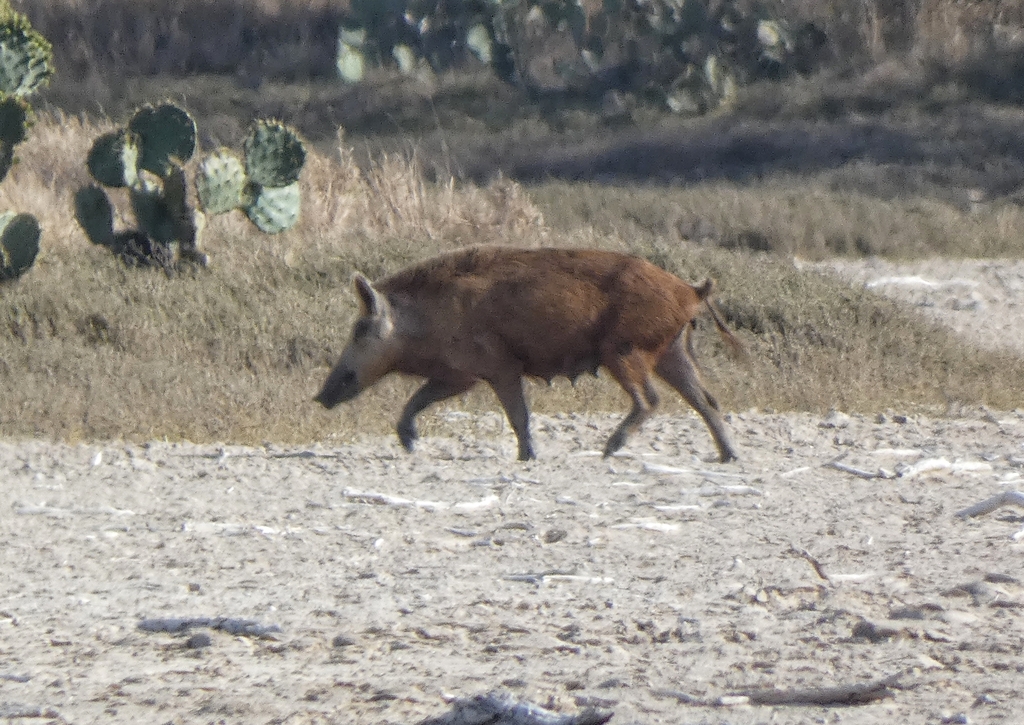
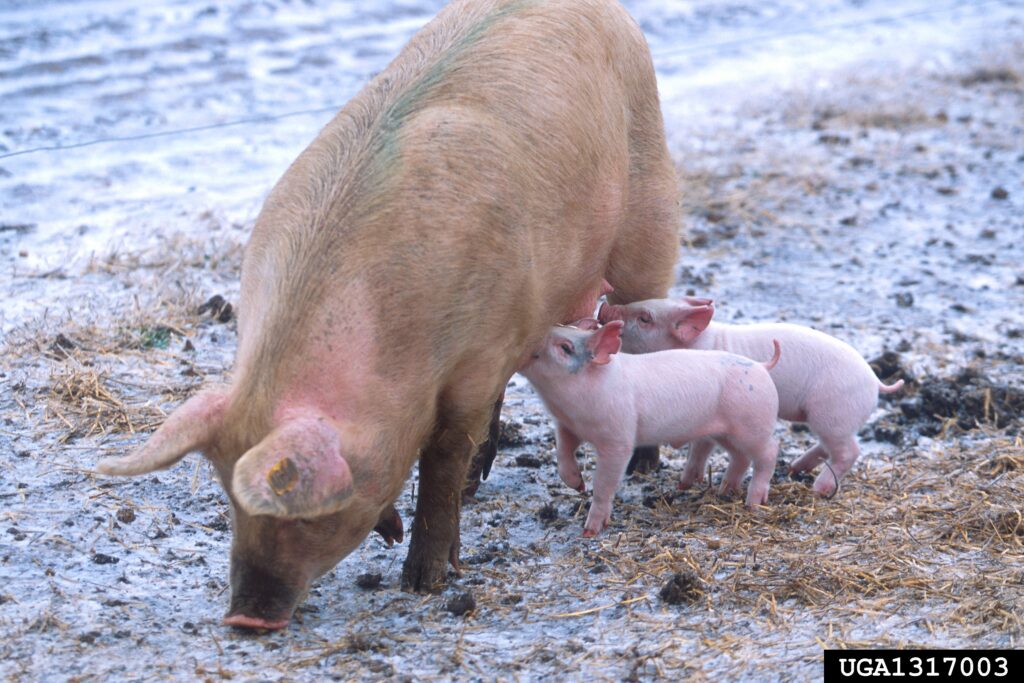
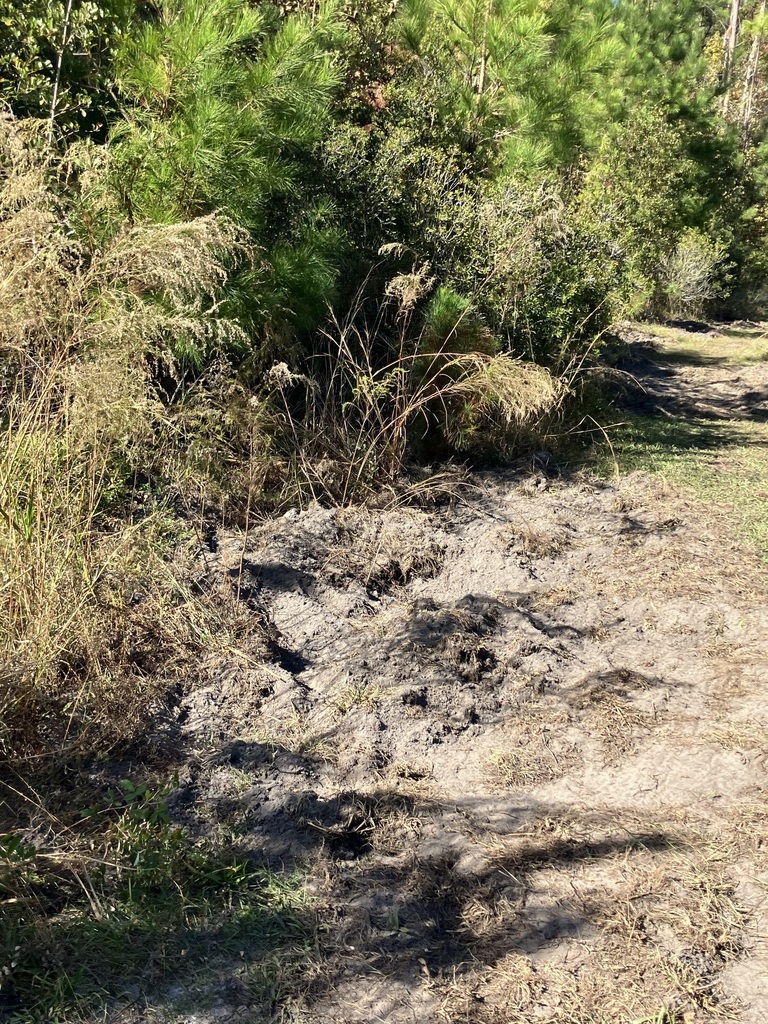
A wild pig includes any animal of the species Sus scrofa found outside of fenced areas or enclosures, making them easy to identify. This includes domesticated pigs (Sus scrofa domesticus), Eurasian Wild Boar (Sus scrofa), and their hybrids. They range in size from 1.5 to 2.4 m long, with adult males being towards the larger end of this range. While standing, they are approximately 1 m tall. Pigs are sexually dimorphic (differences between males and females); male wild pigs are larger than females, weighing between 130 and 440 pounds, with females ranging from 75 to 330 pounds. Some notable features include a long snout, a rough and thick coat of fur, and large teeth that are visible even when their mouths are closed. Specific appearances may vary depending on the subspecies to which it belongs. However, all can grow tusks, and generally, their fur darkens as they age. Dug-up roots, disturbed soil, and wallows (a disturbed muddy area) are also distinct signs that wild pigs were in an area.
One of the most concerning aspects of the wild pig invasion is the interbreeding of different pig species. Domesticated pigs and Eurasian Wild Boar can cross-breed, both in captivity and naturally in the wild, producing viable offspring sometimes referred to as “super pigs”. This hybrid species is better adapted to surviving Canada’s harsh winters, while also exhibiting higher reproductive rates than its parent species.
Wild pigs can live and thrive in a wide range of habitats, allowing them to spread and flourish across Canada’s diverse landscapes. These include grassy savannas or prairies, forests, as well as marshes and swamps. They are typically found in proximity to a water source and prefer densely vegetated areas, providing them with shelter and protection.
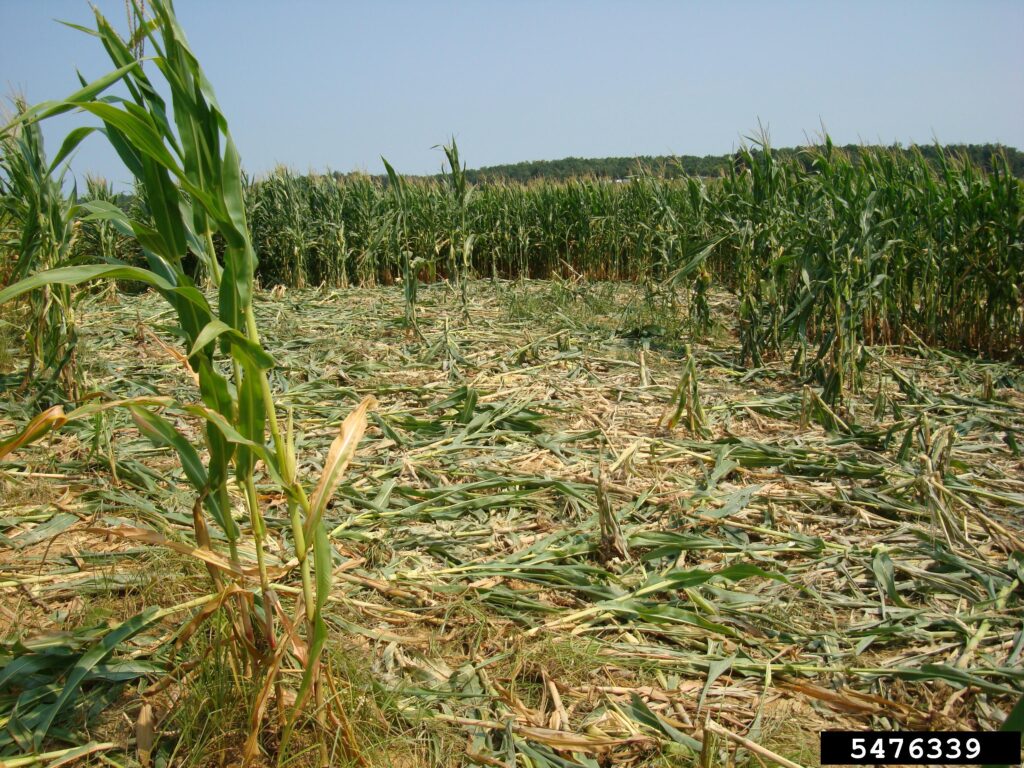
Wild pigs have significant ecological and economic impacts alike. They exert heavy competitive pressures on native species within their introduced environments, causing resource scarcity within ecosystems and reducing biodiversity. Furthermore, they are prolific diggers, using their snouts and tusks to uproot plants while foraging, wallowing (rolling around in mud or water), or gathering materials for nests. These actions disrupt the soil, which risks negatively impacting nearby water quality. They are also vectors of disease, carrying parasites and pathogens that can be transmitted to humans, livestock, and wild animals. If wild pigs become established in Nova Scotia, the primary economic concern is for farmers. Wild pigs can cause hundreds of thousands of dollars in damage to crops, fields, and property while also increasing costs associated with creating stronger fencing and vaccinations for livestock. They are a problematic and costly species to control. It is estimated that damages and control measures can cost over $300 USD per pig. Lastly, they pose a threat to human safety, as they have previously shown aggressive behaviour towards humans and should be avoided in the wild.
Domesticated pigs were first introduced to North America in 1598, likely due to the popularity of pork among Canadian settlers. More recently, Eurasian Wild Boar were introduced to Canada in the 1980s with the intention of farming them as exotic livestock. They have been introduced to the wild, either through escape or intentional release. Once loose, they have mated in the wild, increasing populations and spreading their habitat ranges. An established breeding population of wild pigs has not been sighted in Nova Scotia. They are primarily found in Alberta, Manitoba, and Saskatchewan, with a few additional reports from Ontario and Quebec.

Short cylindrical snouts, tusks, thick coarse fur, disturbed soils, and wallows.

To survive harsh winters, wild pigs have created burrows in the snow, known as “pigloos” for warmth. They even go so far as to insulate these dens with vegetation that they forage.
If you encounter wild pigs, please report your sighting using the Squeal on Pigs website and application, iNaturalist, or report it directly to NSISC.